Jeem - designing a webpage in EN/AR
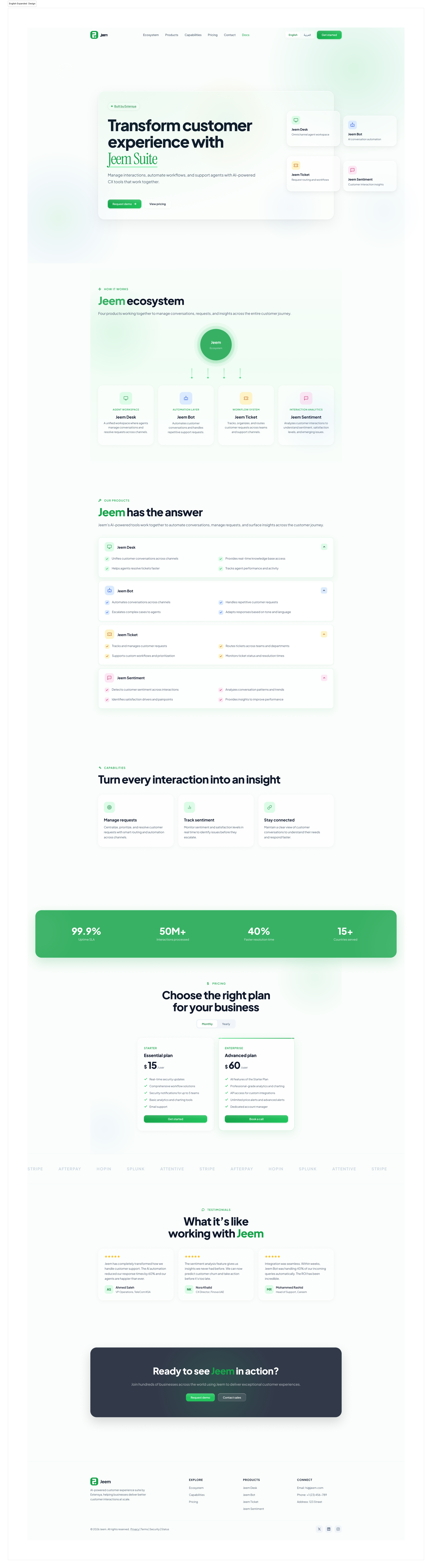
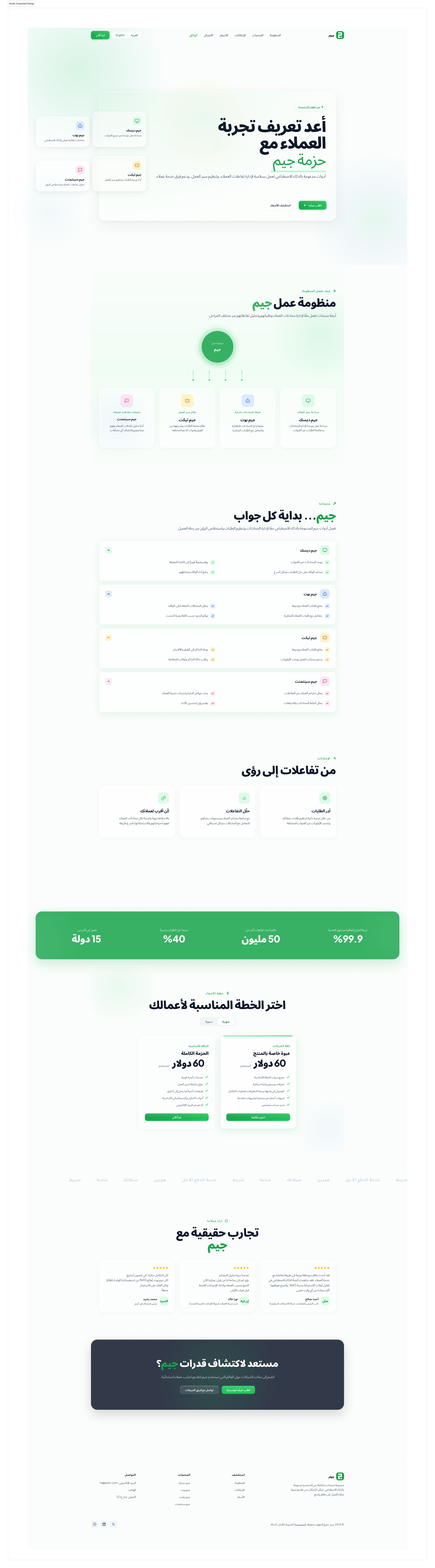
We designed and built the full product website for Jeem by Extensya - four integrated AI products and one clear conversion-focused experiences with complete bilingual support.
Client
Extensya

What they do
Extensya is a leading customer experience company in the Middle East. They were launching Jeem — a suite of four AI-powered products built to transform how businesses handle customer interactions across the region.

The challenge
Jeem wasn't one product. It was four — Jeem Desk, Jeem Bot, Jeem Ticket, and Jeem Sentiment — each solving a different piece of the customer experience puzzle. Extensya needed a product website that could communicate the value of all four without overwhelming visitors, drive demo requests, and work flawlessly in both English and Arabic. The real challenge wasn't design. It was narrative architecture. How do you introduce four complex AI products on one website without losing the visitor halfway through?
The approach and thought process
Most B2B AI websites do one of two things badly. Either they treat every product as a standalone page — which fragments the story and makes the suite feel disconnected — or they cram everything into a generic homepage and rely on the visitor to figure out which product solves their specific problem.

Extensya needed something different. Visitors needed to understand Jeem as a connected ecosystem, but also know exactly which product to ask for a demo of by the time they finished scrolling.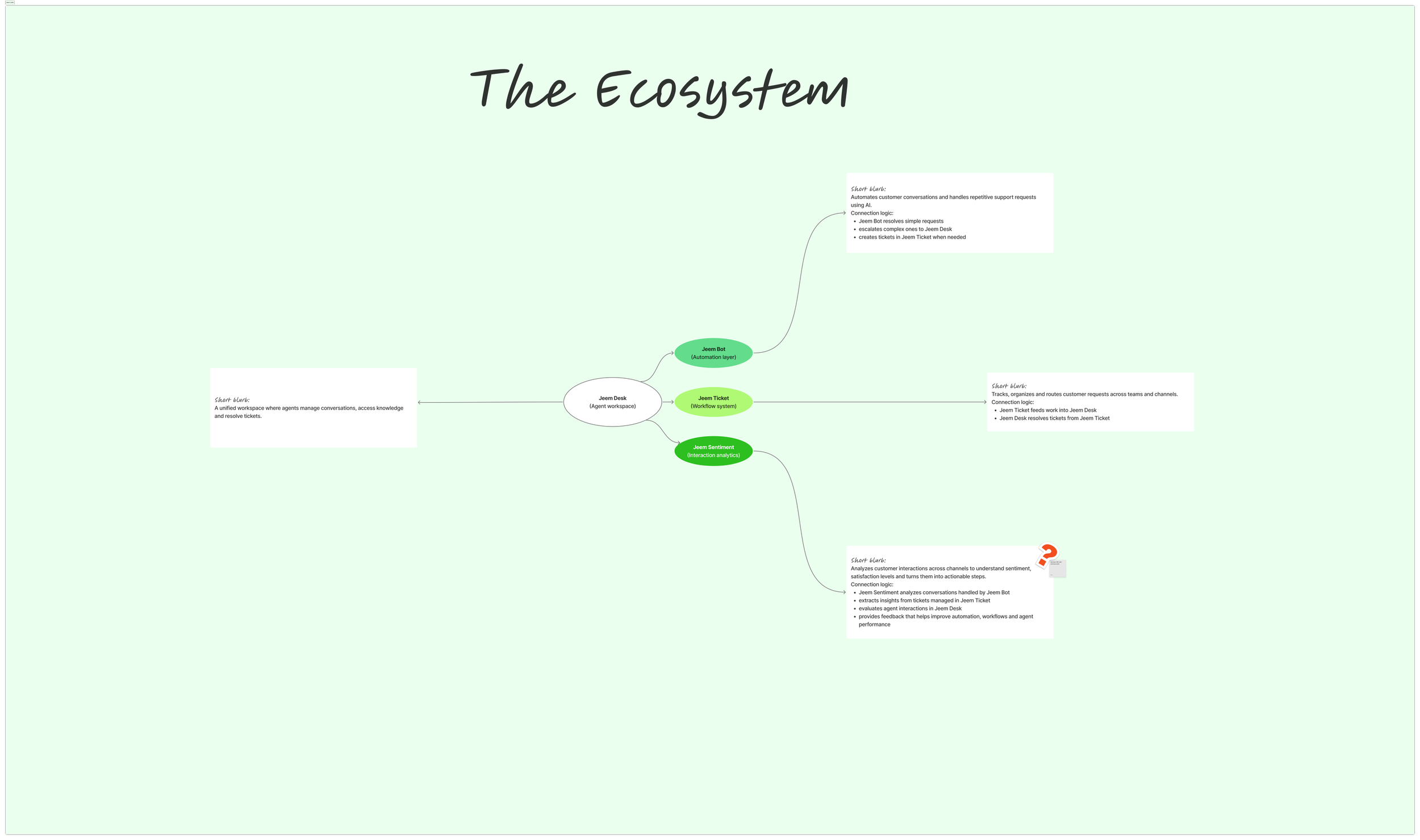
Our guiding principles
We built the site around three principles. Each one shaped a specific part of the experience.
1. Unified product architecture
Instead of treating each AI product as a separate page, we designed a single-page flow that introduces Jeem as an ecosystem first, then walks visitors through each product. Every product section follows the same content pattern — *problem statement → capability → proof* — so understanding builds progressively. By the time you reach the fourth product, you already know how to read the section.

2. Bilingual from the first line of code
Arabic wasn't a translation layer added at the end. The layout system, component spacing, and typography scale were designed to work natively in both directions from day one. Arabic headlines weren't translated word-for-word from English — they were rewritten to carry the same weight and rhythm in a completely different linguistic structure. Buttons, labels, and microcopy were drafted in both languages in parallel.

3. Conversion-focused without being pushy
Every product section ends with a contextual CTA. Instead of one generic "Book a Demo" button repeated across the site, each CTA is matched to the specific problem that product solves. The result: visitors don't just understand Jeem — they understand exactly which product they need before they ask for a demo.
What we designed
Jeem Desk - Unified support dashboard
An omnichannel inbox for support teams. We positioned it as the operational backbone of the suite — the place where every customer conversation lands, gets routed, and gets resolved.

Jeem Bot - Conversational AI
A multilingual AI agent that handles complex queries and hands off to humans when needed. We led with the Arabic-first capability since it's a real differentiator in the region.

Jeem Ticket - Smart ticketing
Auto-categorization, SLA tracking, and custom workflows. Positioned for ops leads who care about throughput and team efficiency.

Jeem Sentiment - Real-time emotion analysis
The "leading indicator" product. Catches issues before they escalate, so we framed it as a tool that turns support data into a strategic signal.